Blog
Humor and Artificial Intelligence
Humor and Artificial Intelligence: Why Laughter Is Still the Most Human Technology We Have | By Steve Rizzo — Hall of Fame Keynote Speaker, Comedian, and Author of “Motivate THIS!”
Let’s talk humor and Artificial Intelligence. First, let me be honest with you right from the start. When someone first suggested I write about humor and artificial intelligence, I laughed. Not because it was funny — though it kind of was — but because my first thought was, “What does a Brooklyn-born, stand-up-comedian-turned-motivational-speaker know about AI?”
Turns out, quite a bit. Because here’s the thing about AI that nobody’s talking about at the big tech conferences: artificial intelligence, for all its breathtaking power, still can’t do what a good laugh does in about three seconds flat. And that, my friends, is something worth exploring.
The Rise of AI — And the One Thing It’s Missing
There’s no denying it. Artificial intelligence is reshaping every industry, every boardroom, every living room, and apparently every coffee shop, since my local barista told me last week that the new espresso machine “practically runs itself.” We’re living in an era of machine learning, large language models, and tools that can write code, compose music, generate images, and even draft a halfway-decent motivational blog post — though, obviously, not this one.
In fact, AI is advancing so rapidly that people across every walk of life are asking the same question: What’s left for humans to do?
The answer, as I’ve been saying on stages from Fortune 500 companies to packed convention halls for over three decades, is simpler than most people think. What’s left for humans to do is be human. And one of the most distinctly human things we do — one of the most powerful, most healing, most productivity-boosting behaviors we possess — is laugh.
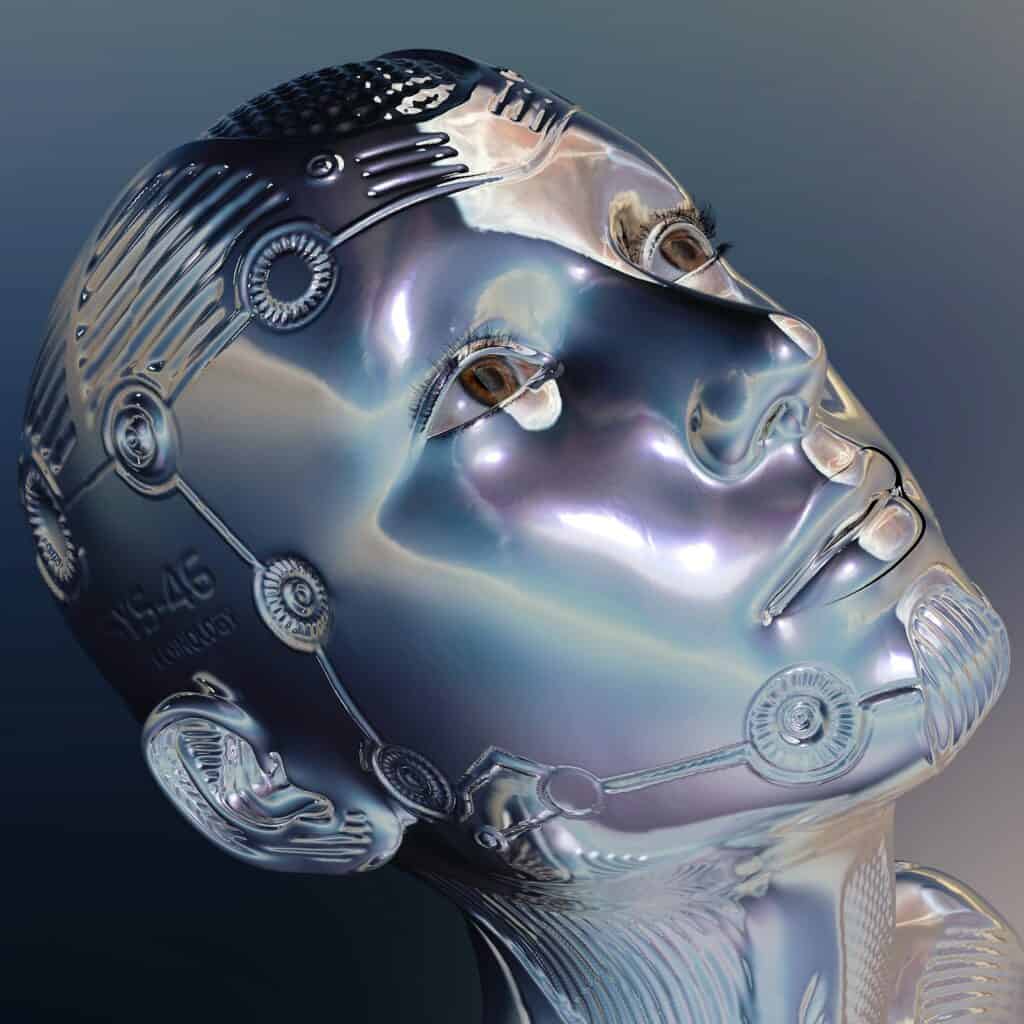
Humor and Artificial Intelligence: What Humor Actually Does (That AI Cannot Replicate)
Before we go any further, let’s get one thing clear. I’m not anti-AI. I’m pro-human. There’s a big difference.
I’ve spent my career teaching audiences that humor isn’t just about getting a laugh. It’s a strategy. In fact, I built my entire brand — “The Mindset Adjuster” — on the premise that how you think, how you laugh, and how you choose to see the world determines everything about your outcomes, both personally and professionally.
Studies have consistently shown that laughter reduces cortisol (the stress hormone), boosts dopamine and serotonin, strengthens immune function, improves memory retention, and increases creative problem-solving. When people laugh together, trust is built almost instantaneously. Walls come down. Defenses soften. Real communication begins.
Now, here’s where it gets interesting. AI can process 175 billion parameters. It can write a joke. It can even explain why a joke is funny. But AI cannot feel the release that comes with genuine laughter. It cannot share in the joy of a room that’s just erupted because the right word was said at the right moment. It cannot course-correct in real time the way a skilled comedian — or a skilled leader — does when a joke lands flat and the energy in the room shifts.
Consequently, no matter how sophisticated AI becomes, it will always be missing the secret ingredient that makes humor work: authentic human connection.
“But Steve, Can’t AI Write Jokes?”
Yes. Yes, it can. And some of them are genuinely clever. I’ve seen AI-generated comedy prompts that made me smile. I’ve even seen AI chatbots attempt roasts that were surprisingly sharp.
But here’s where the rubber meets the road. Writing a joke and delivering a joke are two entirely different animals. Any comedian worth his salt will tell you that timing isn’t just about the pause before the punchline. It’s about reading the audience, noticing that the guy in the third row is checking his phone and adjusting your energy accordingly. Feeling the collective heartbeat of 500 people and knowing — knowing — that this is the exact moment to say the unexpected thing.
That’s not a skill you can train into a model. That’s a human skill. It’s called presence. And as a former national headline comedian who shared stages with Jerry Seinfeld, Eddie Murphy, Rodney Dangerfield, and Ellen DeGeneres, I can tell you with complete confidence: presence is not something you can automate.
Furthermore, when humor lands in a live setting — when it genuinely connects — it changes something in the room. It shifts the energy. It creates a shared moment that everyone remembers. That is, at its core, a profoundly human experience. No algorithm gets to claim that moment.
Humor and Artificial Intelligence: The Humor Being vs. The Machine
Before describing the characteristics of what I call a “Humor Being,” let me first define what a sense of humor is. The dictionary says the word means “perception or awareness; and correct reasoning; or sound judgment.” The word “humor” means “turn of mind; to sooth temper or mood, or the mental quality that produces absurd or joyful ideas.” So, we can say, that a “sense of humor” means to be aware that you have a mental quality to turn your mind in an unusual way, or a need to produce joyful or absurd ideas that can soothe your very being. However, the initiative and proficiency by which you utilize your sense of humor comes from what I call your “Humor Being.”
Humor Being to the Rescue
The goal is to become what I’ve dubbed a “Humor Being.” It’s someone who chooses to see and share the lighter side of life even in high-pressure situations. The difference between those two things is enormous, and it’s a distinction that can transform your entire approach.
I believe everyone on this planet is born with their own internal Humor Being. Unfortunately, most people live their entire lives without ever knowing they have this powerful gift within them, let alone how to tap into it and make it work for them. Your Humor Being is of your higher nature. It’s a gift from God, the Universe or whatever you choose to call the higher power within. It’s the part of you that brings out the best of who you are, especially when times get tough. What your Humor Being gives you more than anything else is emotional stability, peace of mind, and joy. Making a habit of invoking your Humor Being will turn you into a happier person with a healthier outlook on life.
For years, I’ve talked your Humor Being — the part of you that has the power to choose a better way of seeing things, even when life isn’t cooperating. It’s the part of you that can find the absurdity in a terrible situation and use that absurdity as a bridge back to hope, resilience, and forward momentum.
Your Humor Being is not a comedy module. It’s not a feature you activate. It’s a mindset — one that fundamentally changes how you respond to adversity, how you lead, how you sell, how you parent, and how you show up every single day.
In contrast, AI operates from data. It responds to input. It optimizes for outcomes. These are remarkable capabilities. But they are not the same as wisdom, and they are certainly not the same as the choice to laugh in the face of a challenge.
Think about it this way. When I left a thriving stand-up comedy career at its peak to become a motivational speaker, a lot of people thought I was crazy. The safe play — the logical play — would have been to keep doing what was already working. But my Humor Being told me there was something bigger to pursue. A deeper purpose. A way to use laughter not just to entertain, but to genuinely transform lives.
AI would have run the numbers and probably told me to stick with comedy. And it would have been completely, 100% wrong.
Why AI Actually Makes Human Humor More Important Than Ever
Here’s the twist that most people miss when they start worrying about AI taking over: the more automated and digitized our world becomes, the more valuable authentic human humor becomes. Not less.
Think about the last time you sat through a conference filled with back-to-back Zoom presentations, data decks, and corporate-speak. How did that feel? Probably like a slow march toward the end of your will to live. Now think about the moment someone in that meeting cracked a genuine, well-timed joke. What happened? The whole room shifted. People leaned forward. Energy returned. Connection was restored.
As a result of living in an increasingly AI-driven world, people are hungry for realness. They’re starving for moments that feel genuine. They want to laugh with a real person, be moved by a real story, and feel the kind of human warmth that no chatbot — however polished — can manufacture.
This is why, when I walk onto a stage today, I’m not competing with AI. I’m offering something AI fundamentally cannot: the experience of being in the room with a real human being who has genuinely lived, genuinely struggled, genuinely laughed, and genuinely figured something out.
Humor and Artificial Intelligence: Humor as a Leadership Tool in the Age of AI
Let’s bring this into the boardroom for a moment, because this matters enormously for leaders navigating the AI revolution.
If you lead a team right now — whether you’re a VP, a sales manager, a department head, or a small business owner — your people are scared. They’re reading the headlines, wondering if their job will exist in five years. Feeling anxious, distracted, and emotionally depleted. And no amount of AI-generated productivity tools is going to fix that.
What fixes it is leadership. Real, human, connected leadership. And one of the most underused tools in a leader’s arsenal — one I’ve been championing for thirty years — is humor.
Not sarcasm, ridicule or self-deprecating anxiety spirals dressed up as jokes. I mean the kind of genuine, good-natured, perspective-shifting humor that says: “I see you. I’m with you. And together, we’re going to figure this out.”
When leaders bring authentic humor into their culture, something remarkable happens. Creativity increases because people feel safe enough to share ideas without fear of judgment. Resilience increases because laughter is literally one of the brain’s best stress-response tools. Retention increases because people don’t leave workplaces where they feel connected and appreciated.
In other words, humor is not a soft skill. It is a strategic leadership advantage. And in the age of AI, it may be the most competitive differentiator you have.
The Great Irony of Artificial Intelligence and Comedy
There is a beautiful irony at the heart of all this. As AI becomes more sophisticated, it is also becoming more aware of its own limitations around humor. Researchers in computational linguistics, affective computing, and natural language processing have spent enormous resources trying to teach machines to be funny. And every time they get close — every time a model produces something that resembles wit — they run into the same wall.
Humor is deeply contextual. It depends on shared experience, cultural nuance, emotional state, timing, and the specific relationship between the person telling the joke and the person hearing it. Vulnerability. Trust. These are not variables that can be fully captured in a dataset.
Moreover, what makes something funny is often the element of surprise — the unexpected juxtaposition that catches you off guard and bypasses your defenses. AI, by definition, is built on pattern recognition. True surprise, the kind that produces genuine laughter, is profoundly anti-pattern. It breaks the rules. It defies expectation. And for now, at least, it remains uniquely human.
Humor and Artificial Intelligence: Shifting Your Mindset: Humor and AI as Partners, Not Rivals
Now, I want to be clear about something. I’m not standing here on my soapbox telling you to ignore AI, fear AI, or pretend AI isn’t happening. That would be the equivalent of telling people in 1994 to ignore the internet because it “lacks soul.” Bad advice then, bad advice now.
Instead, I’m inviting you to shift your mindset — which, as you may know, is kind of my thing.
The shift is this: rather than asking, “What can AI do that I can’t?” — start asking, “What can I do that AI can’t?”
And when you ask that question honestly, humor rises to the top of the list almost immediately. Because the ability to be genuinely, authentically funny — to use laughter as a tool for connection, healing, resilience, and transformation — is one of the most distinctly human gifts we possess.
Use it. Develop it. Protect it. Because in a world of increasingly intelligent machines, your Humor Being is not a liability. It is your greatest competitive advantage.
Humor and Artificial Intelligence: The Bottom Line
I started my career as a kid from Brooklyn who was told he didn’t have the intelligence for college. I went on to share stages with some of the greatest comedians who ever lived, then walked away from all of it to spend the next thirty years helping people discover the power of choosing a better attitude through the power of humor.
Through all of it, the one lesson that has never changed, never faded, and never become obsolete is this: laughter connects us to what is most essentially human about being alive.
AI is remarkable. It is genuinely transforming the world. And as it does, the humans who will thrive — in business, in leadership, in life — are the ones who double down on their humanity. Who choose presence over productivity, connection over optimization. Those who understand that a well-timed laugh in the right moment can do more for team morale, creative output, and human flourishing than any algorithm ever devised.
So the next time someone tells you the machines are taking over, just remember: they don’t have a Humor Being. You do.
Use it.
Steve Rizzo is a Hall of Fame funny keynote speaker, former national headline comedian, and author of “Motivate THIS!” and “Becoming a Humor Being.” He has shared stages with Jerry Seinfeld, Eddie Murphy, and Ellen DeGeneres, and is a regular contributor to SUCCESS magazine. His comedy clips air daily on SiriusXM. To book Steve for your next event, visit steverizzo.com.